Installation photos
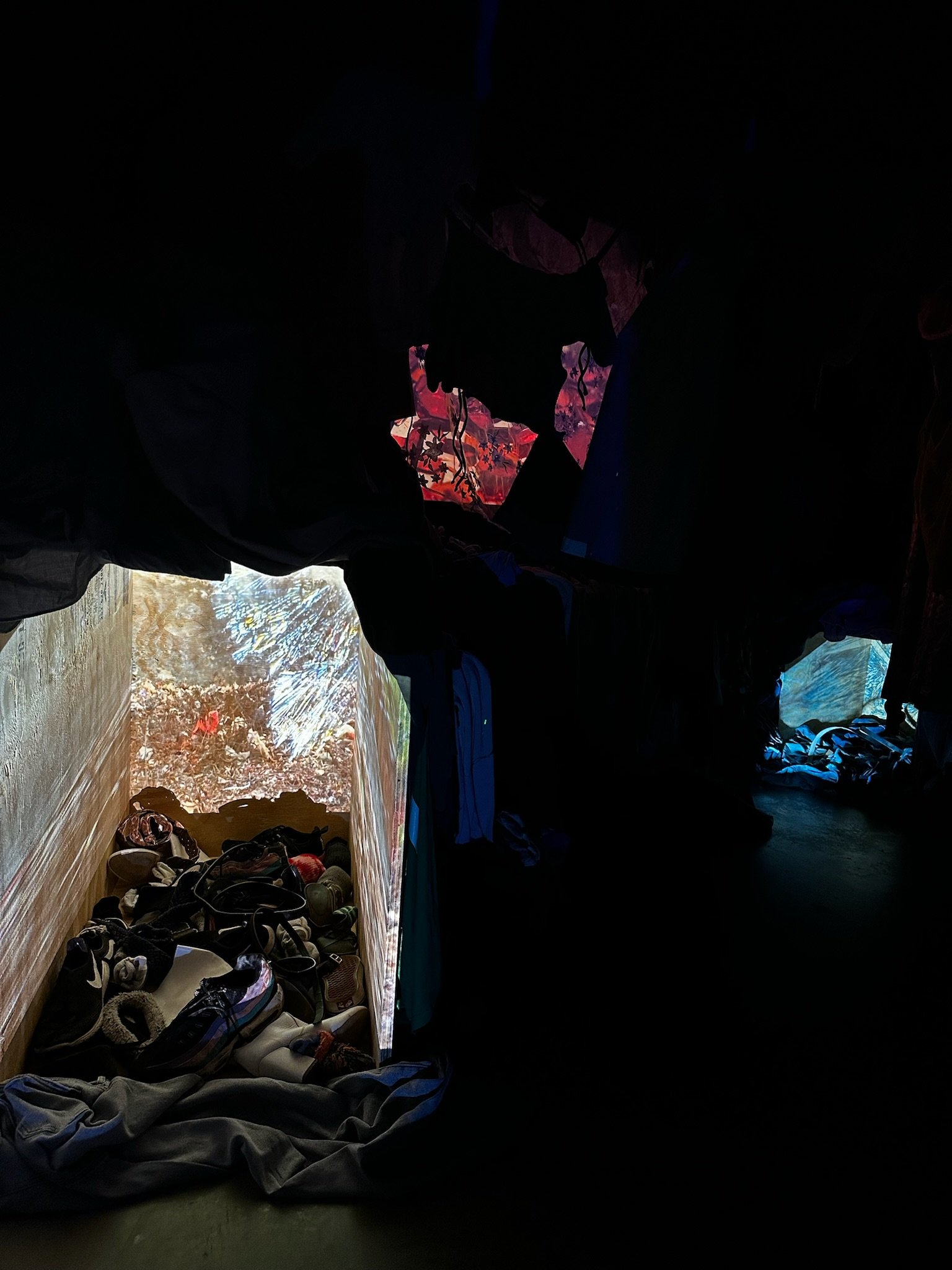
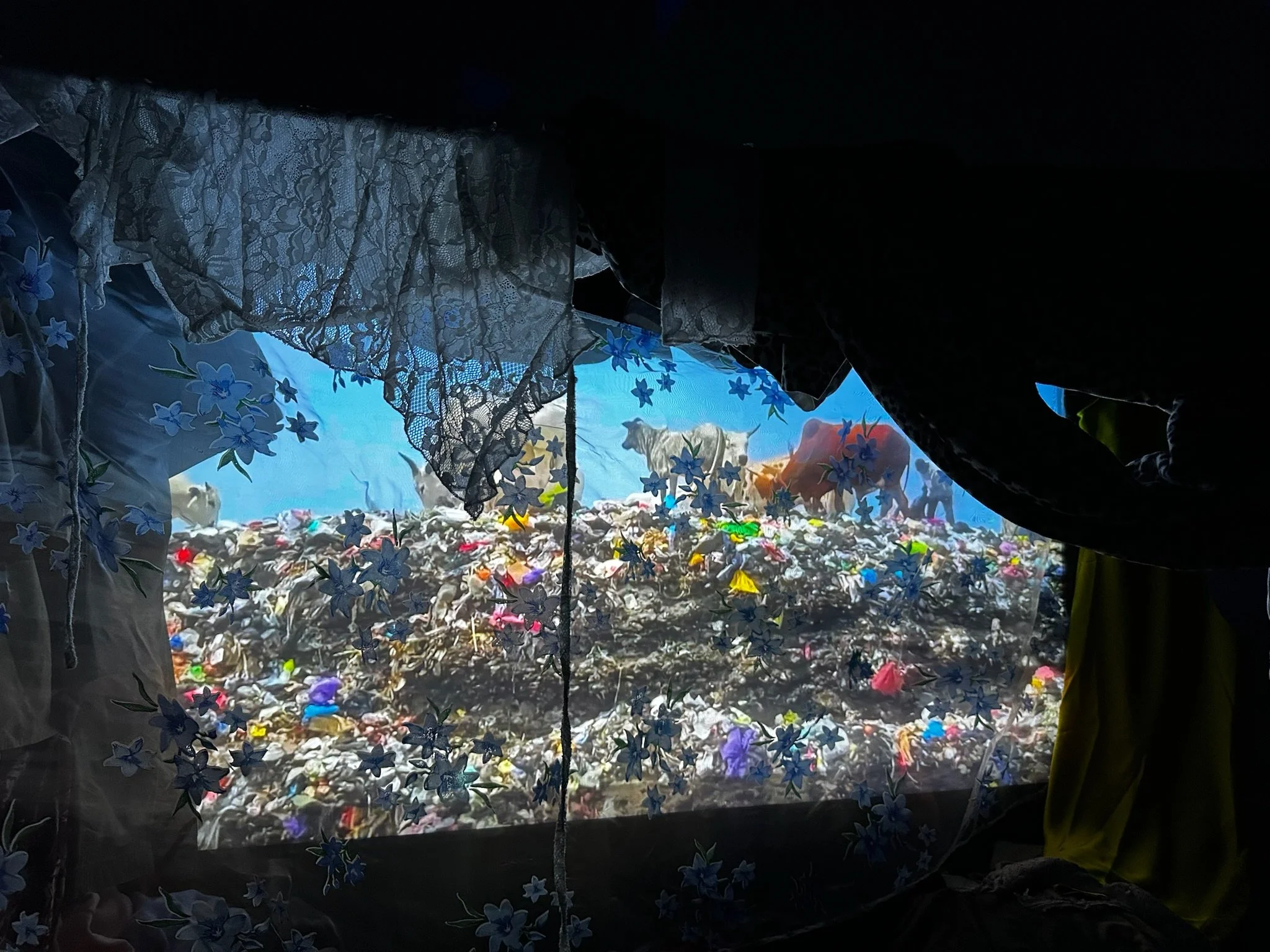
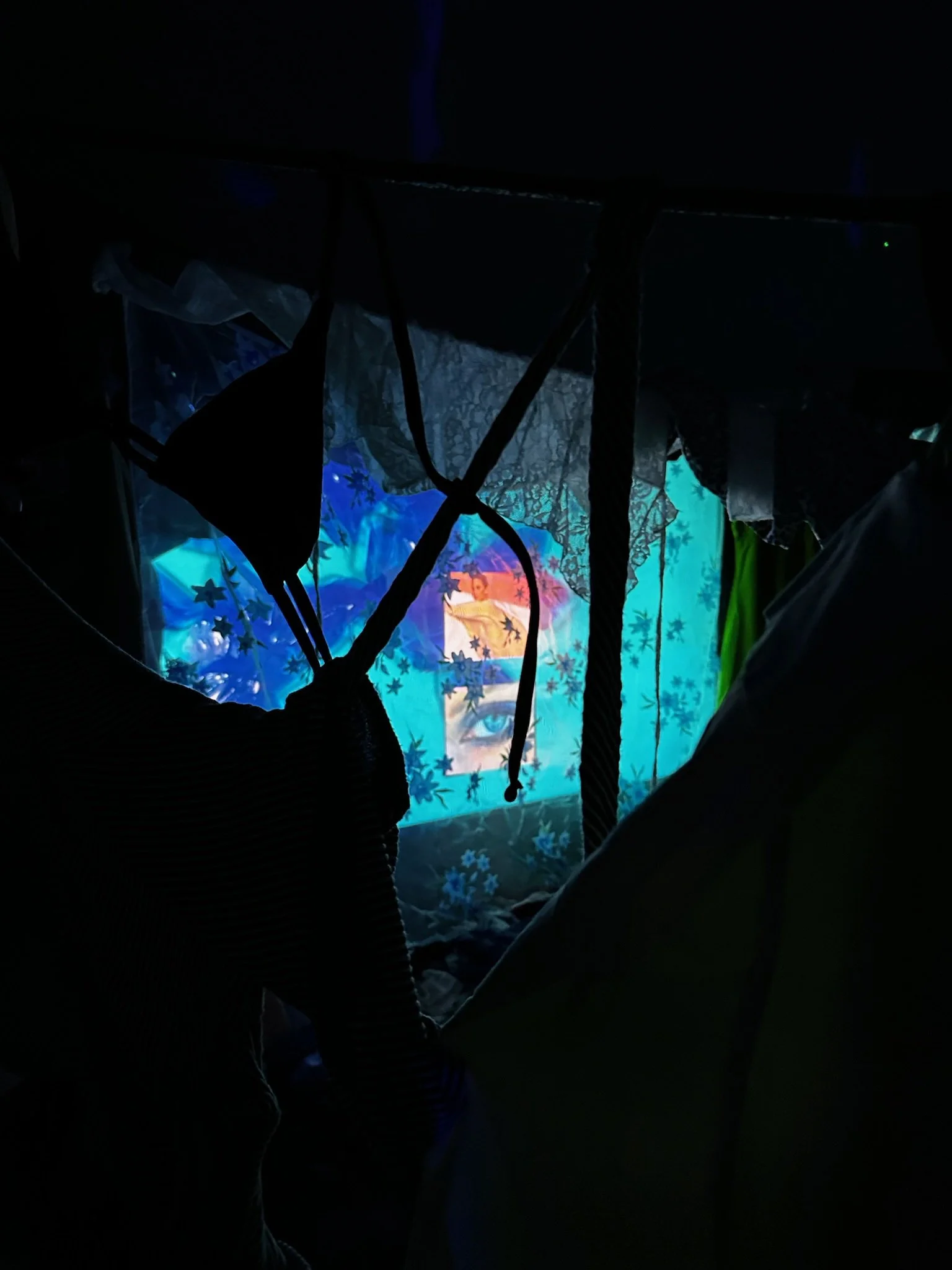
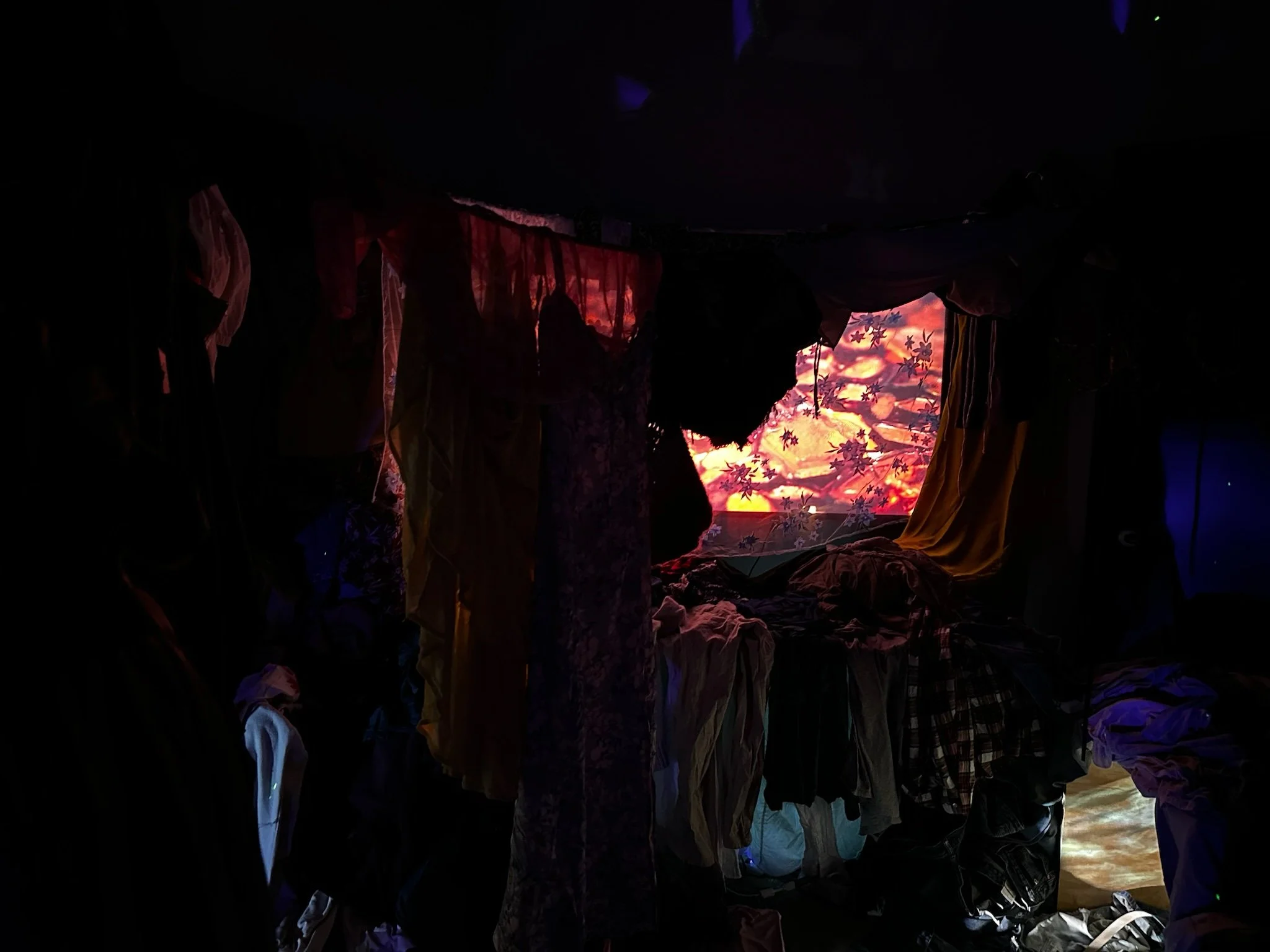
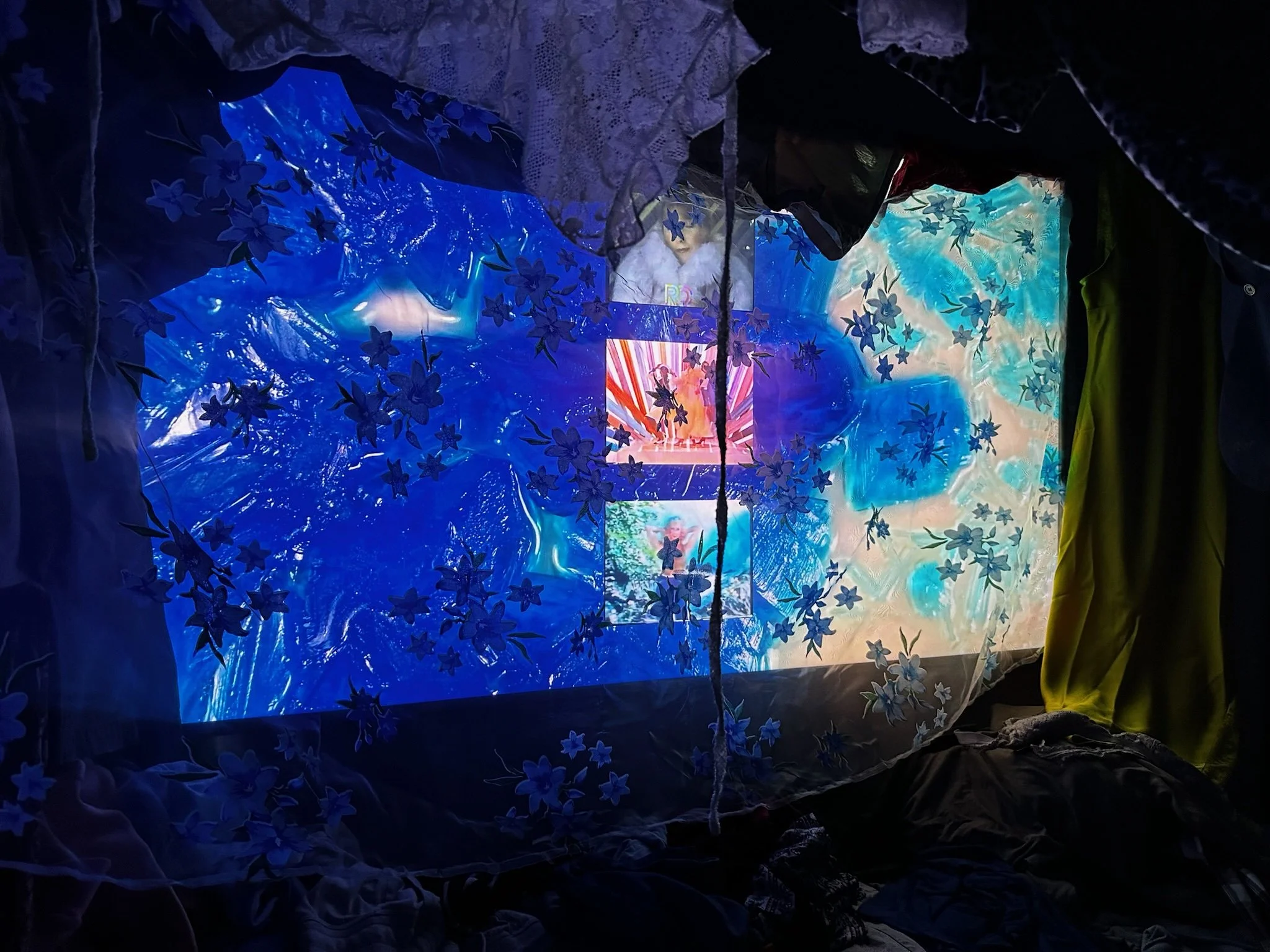
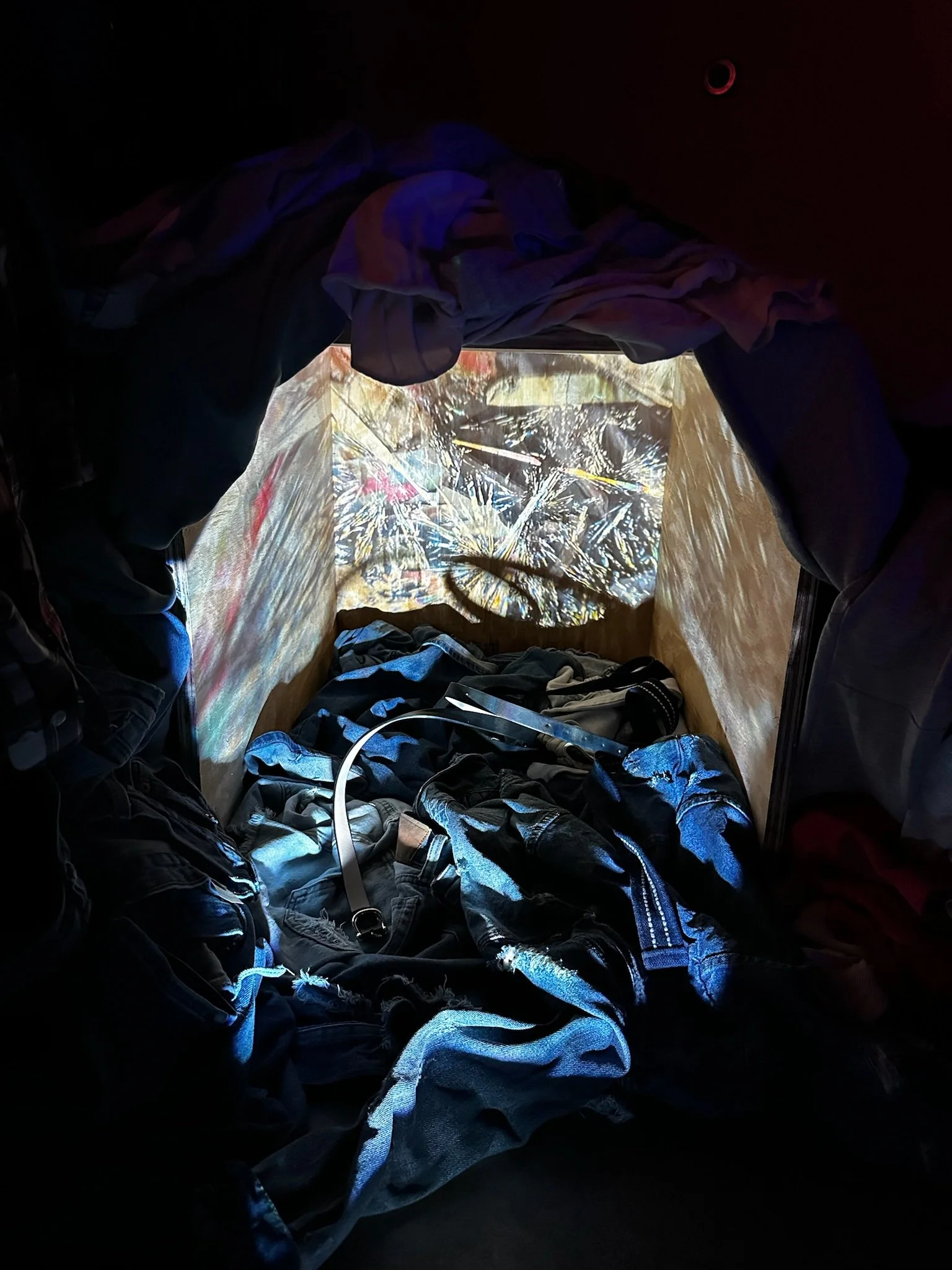
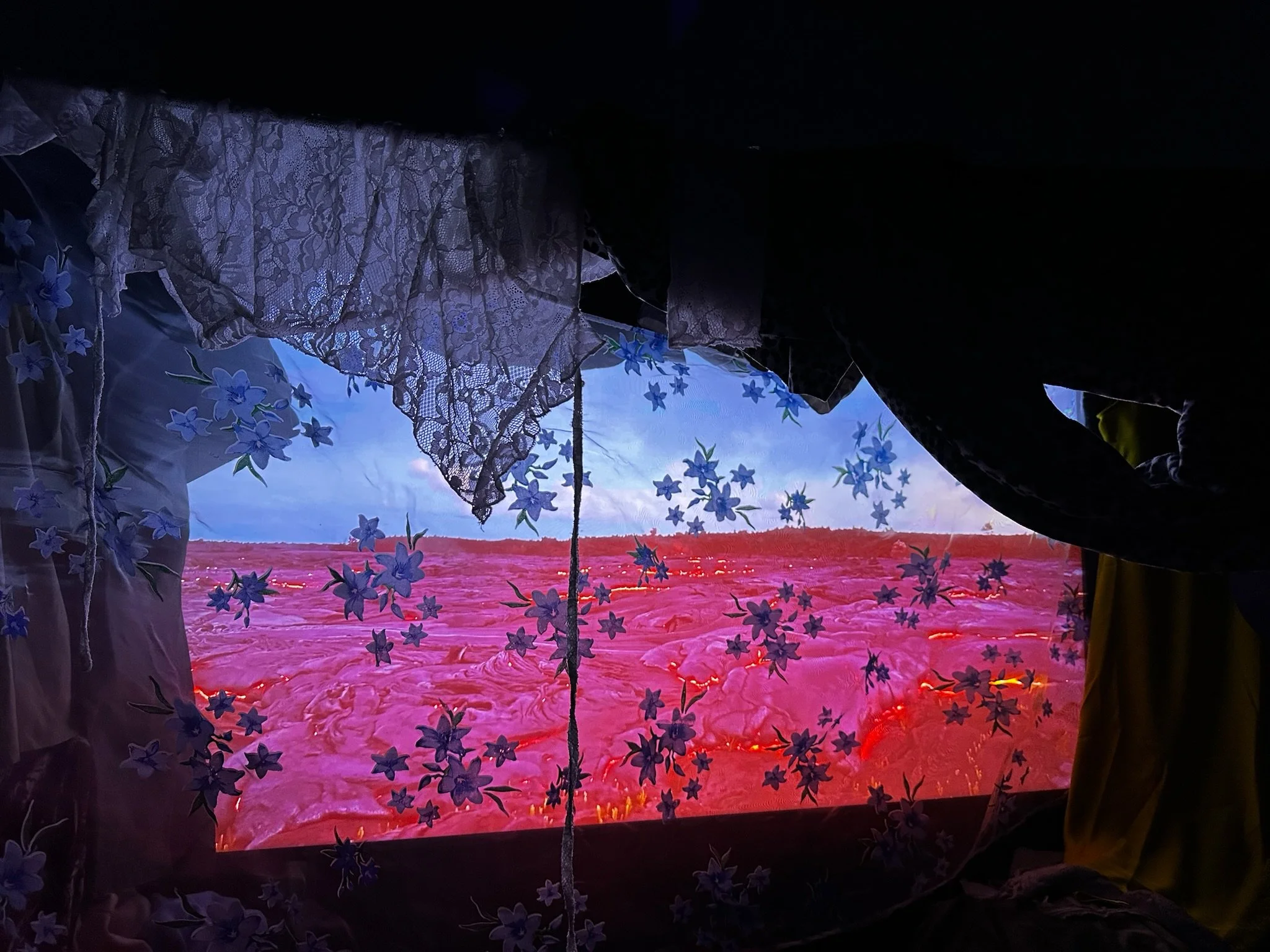
SEDIMENT is a 3-channel video collage and textile sculpture installation addressing the deterioration of the functional relationship between body and clothing. Rapidly increasing consumption and mass production of textile products in the last 40 years has generated an astounding amount of waste. This pollution is now a physical medium with the power to forge new landscape features. Mountains of discarded clothing, sometimes still unworn, are accumulating in the global South. The installation focuses particularly on the rapidly expanding waste formations in Accra, Ghana, and Chile’s Atacama desert, fed steadily by streams of cargo ships from wealthy, consumerist countries like the United States. The work imagines these clothing mountains as true geologic features, shaped not by natural Earth processes over hundreds of millions of years, but by the human whims of yearly, monthly, and even weekly cycles of clothing trends and purchases. Synthetic fabrics in mass-produced textiles ensure the material lives on exponentially longer than the short time it takes to reach its geologic grave. Chemical and physical forces no longer determine the shape of the Earth as quickly as our desires and our dollars.
The textile sculptures engulf and transform the room into a tangled and weaving cave, as if one could explore the inside of a clothing mountain. Clothes hang from the ceiling and rise from the floor like stalactites, forcing the viewer to duck, bend, and squeeze their way through the space. The size of the individual body is dwarfed by the volume of textiles that have already been digested by the collective, displaying the physically absurd rates of production and turnover. Items of clothing salvaged from the local community confront and potentially reflect the viewer at every turn: sweaters, robes, shoes, prom dresses, coats, belts, bags, t-shirts, and an array of other neglected items, some still dangling unbroken tags. They are amalgamated organically and displayed carefully. The project facilitated sourcing and transportation of all clothing donations, so items were neither actively worn nor actively given away, but left around, unused or forgotten about: a pure example of frivolous excess.
Seismic wave recordings of earthquakes, transposed into the frequency of human hearing, echo and shatter through the space disturbingly. These audio recordings envelope the viewer in Earth’s interior and layer real geologic references into the fantastical installation. Imagery of volcanic activity and mineral precipitation merge with documentary footage of the sites in Ghana and Chile, blending geologic and pollutant mountain formation. Archival video shows fragments of the waste transportation infrastructure juxtaposed with advertisement media. Commercial imagery are woven into the video collage, echoing the corporate and marketing hypnosis influencing consumer behavior and burying the environmental injustices engrained into systems of textile production and consumption. Whether it be an ad for jeans from the 1980s or your local sorority girl’s single use, fast-fashion in a trash bag headed for Goodwill, each propels the landslide of waste shipments burying Southern ports every day.