Installation photos
Vorticity Sustains the Spiral: On Risk and What Remains
MECOO
You’ve likely heard the prompt: What 5 things would you take with you if you had to flee your home in an emergency? Typical answers include legal and physical essentials such as medicines, IDs, passports and paperwork, cash, etc. The list reflects the top priorities for immediate bodily safety, but the question is underlain with a deep sense of sacrifice. I’m left to wonder: What gets left behind?
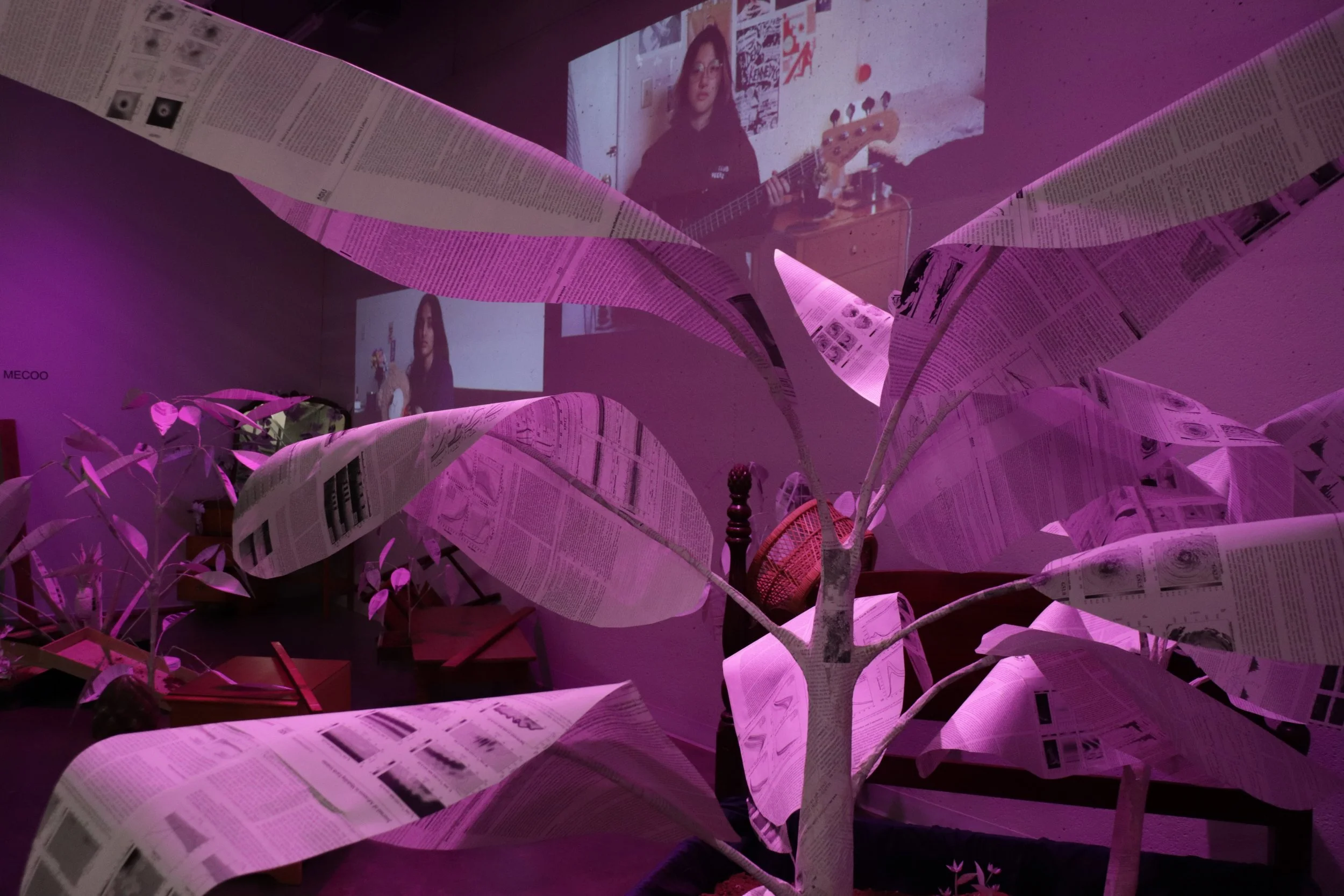
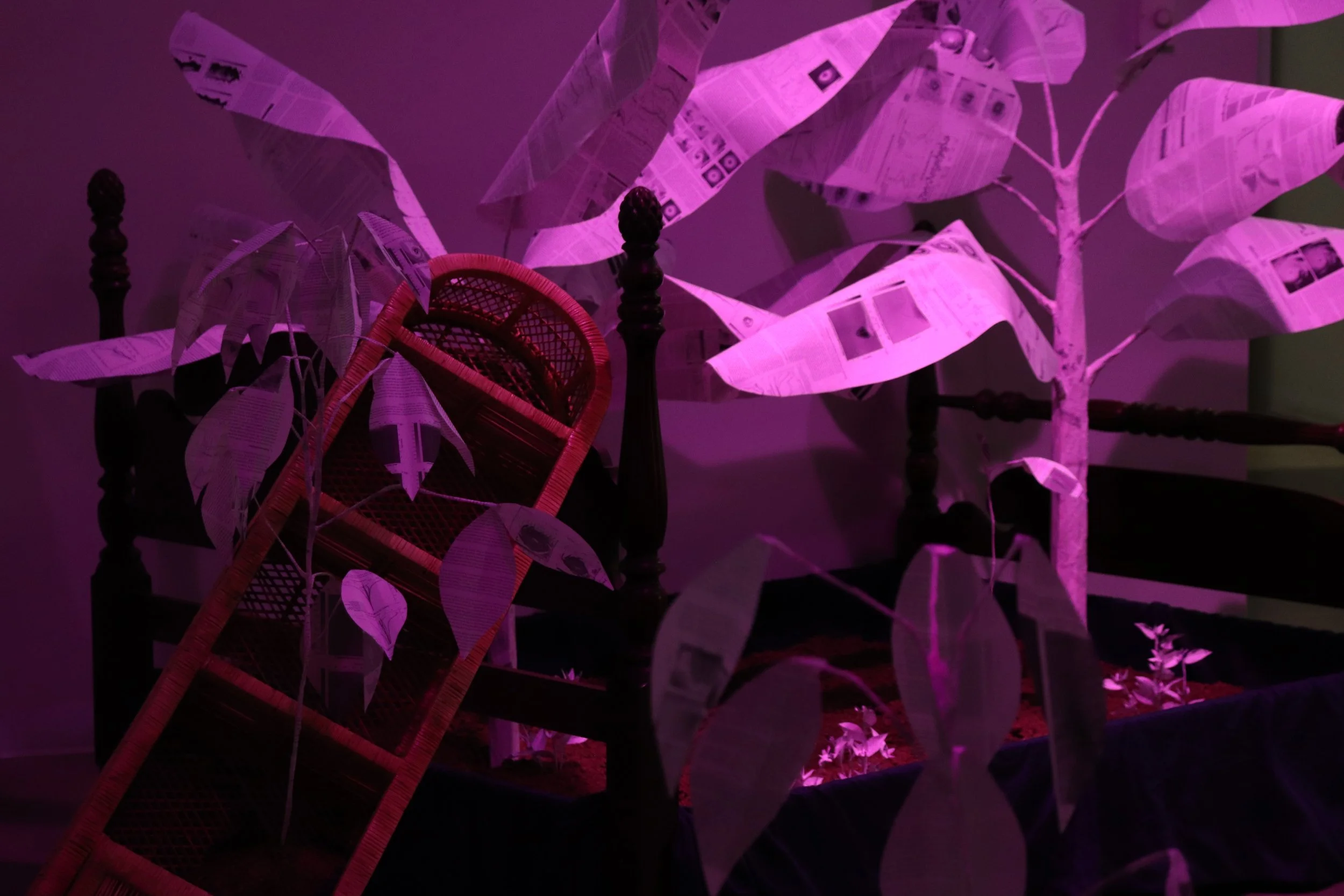
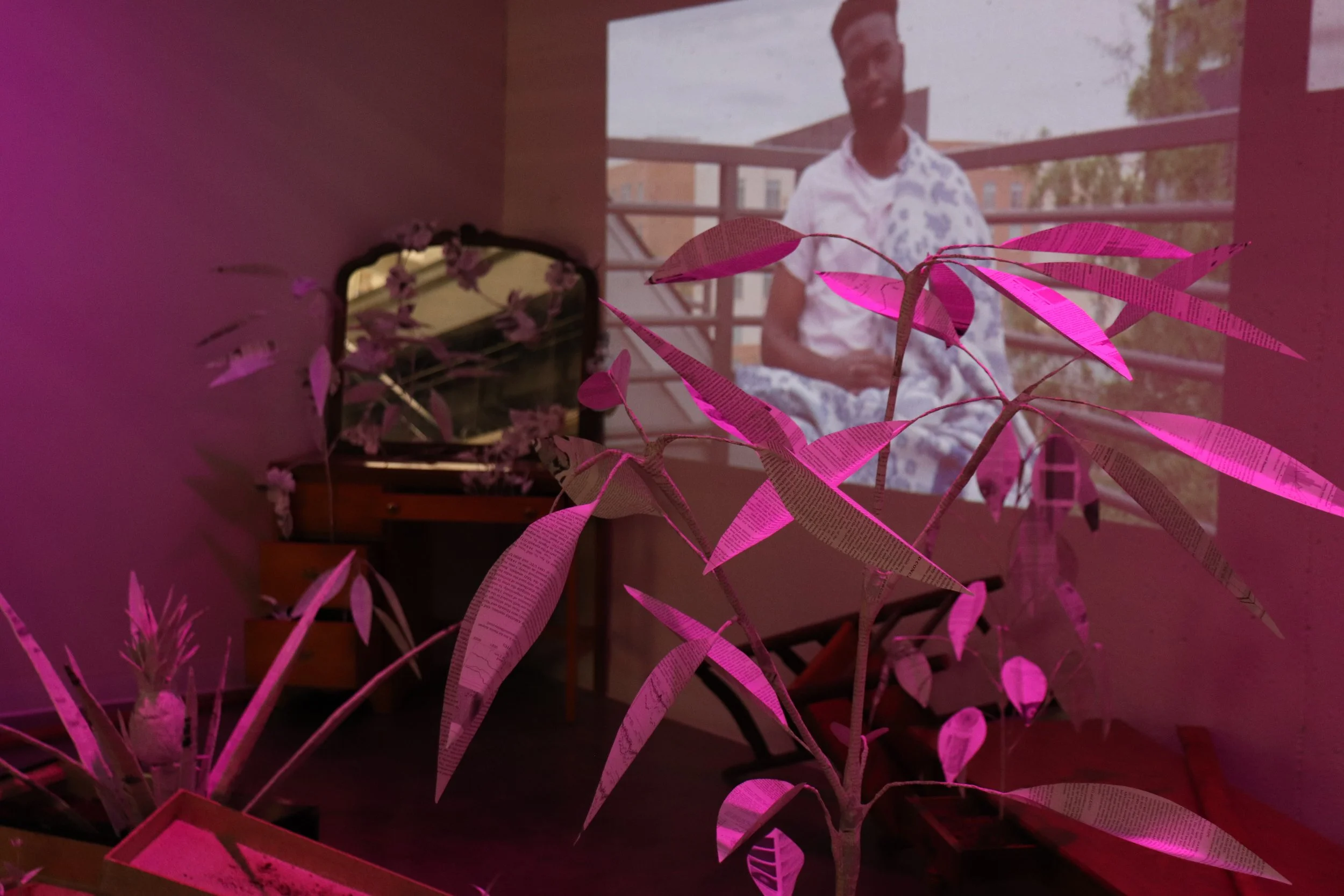
This installation is a re-planting and re-imagining of my grandfather’s beloved fruit garden outside the city of Tampa. Late this past September, the deadliest Hurricane in the United States since Katrina made landfall where the East coast of Florida meets the Gulf of Mexico. Her name was Helene. Despite being lucky enough to evacuate, the storm destroyed my grandparent’s home and all their possessions, along with countless others in the area and in multiple other states. What wasn’t damaged by the immediate effects was ruined by the ensuing combination of hot days, waterlogged objects, and no power; everything molded. The winds and the salt water did not spare the non-human beings who were unable to leave, viciously killing the garden my grandfather spent many years tending and raising from the seeds of his own meals. When clean up efforts began, each residence had emptied their home of every object it held, placing them mournfully into unending piles that lined the pavement as far as it stretched. These debris piles were unlike any wreckage I had seen before, because they were moved not only by physical forces but by the hands of those they belonged to. Items were carried tenderly, by loving arms, and the mounds grew with a sense of both construction and destruction. Nothing else resembles the shapes and sculpture that are created by this action, and the sight has always stayed with me.
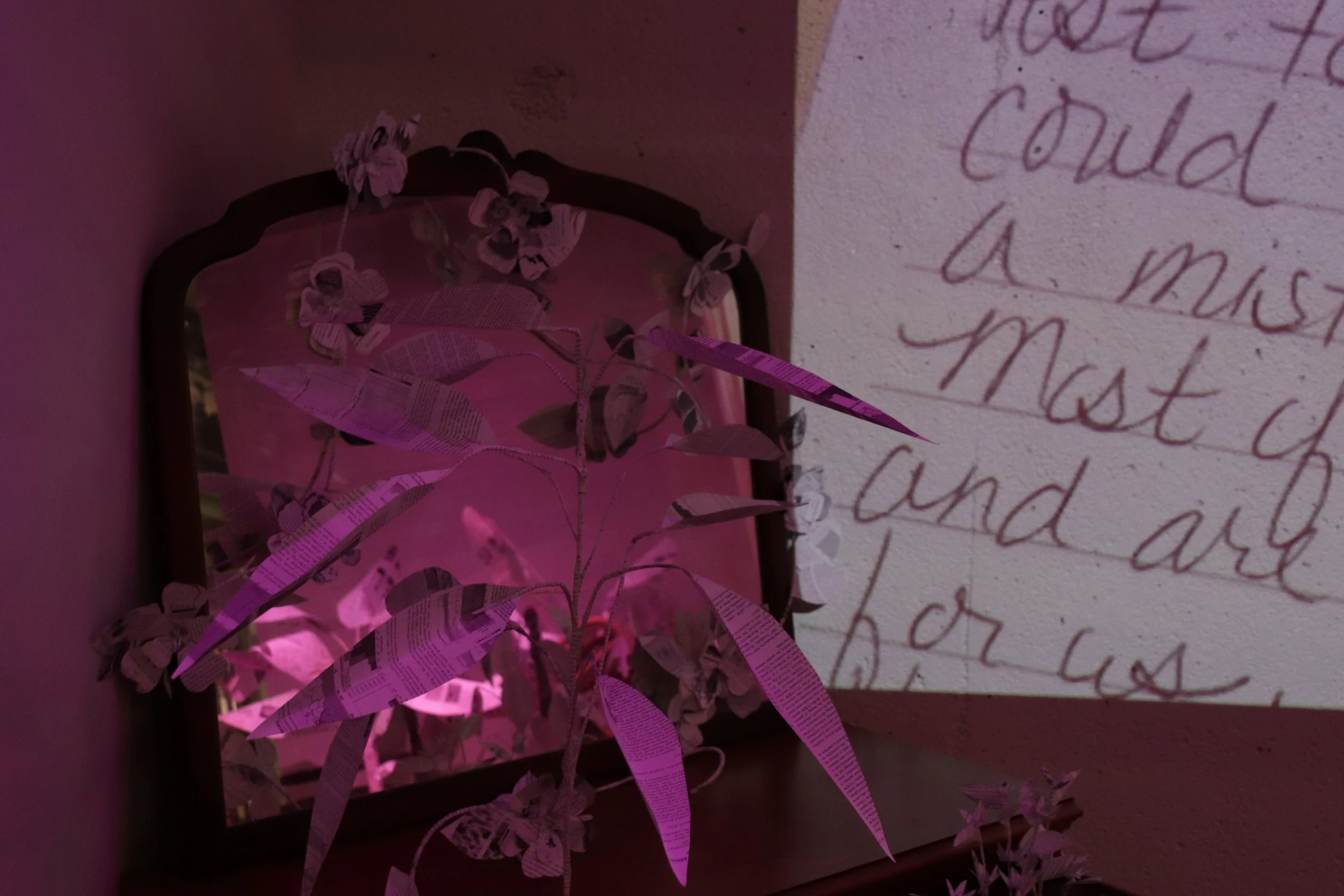
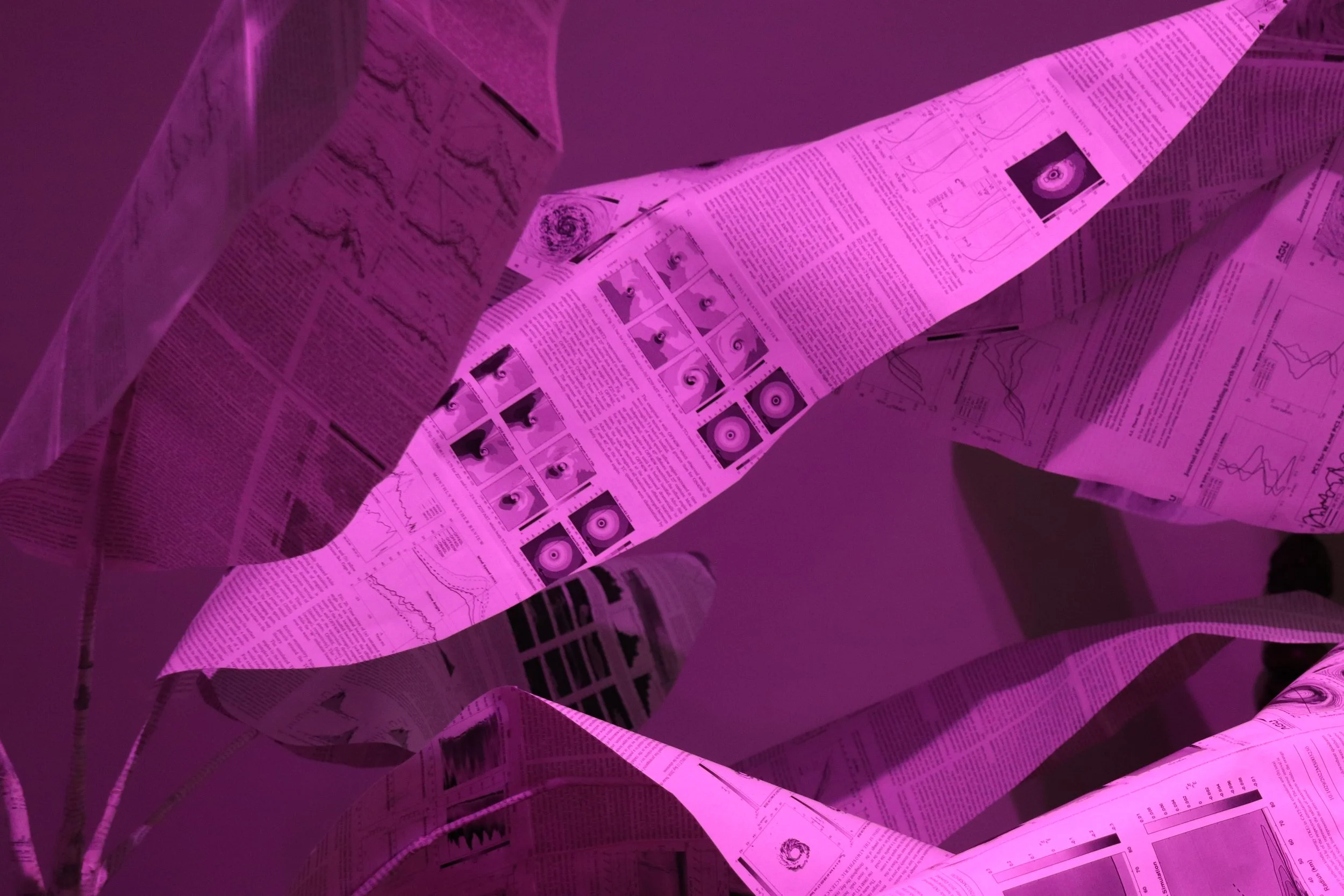
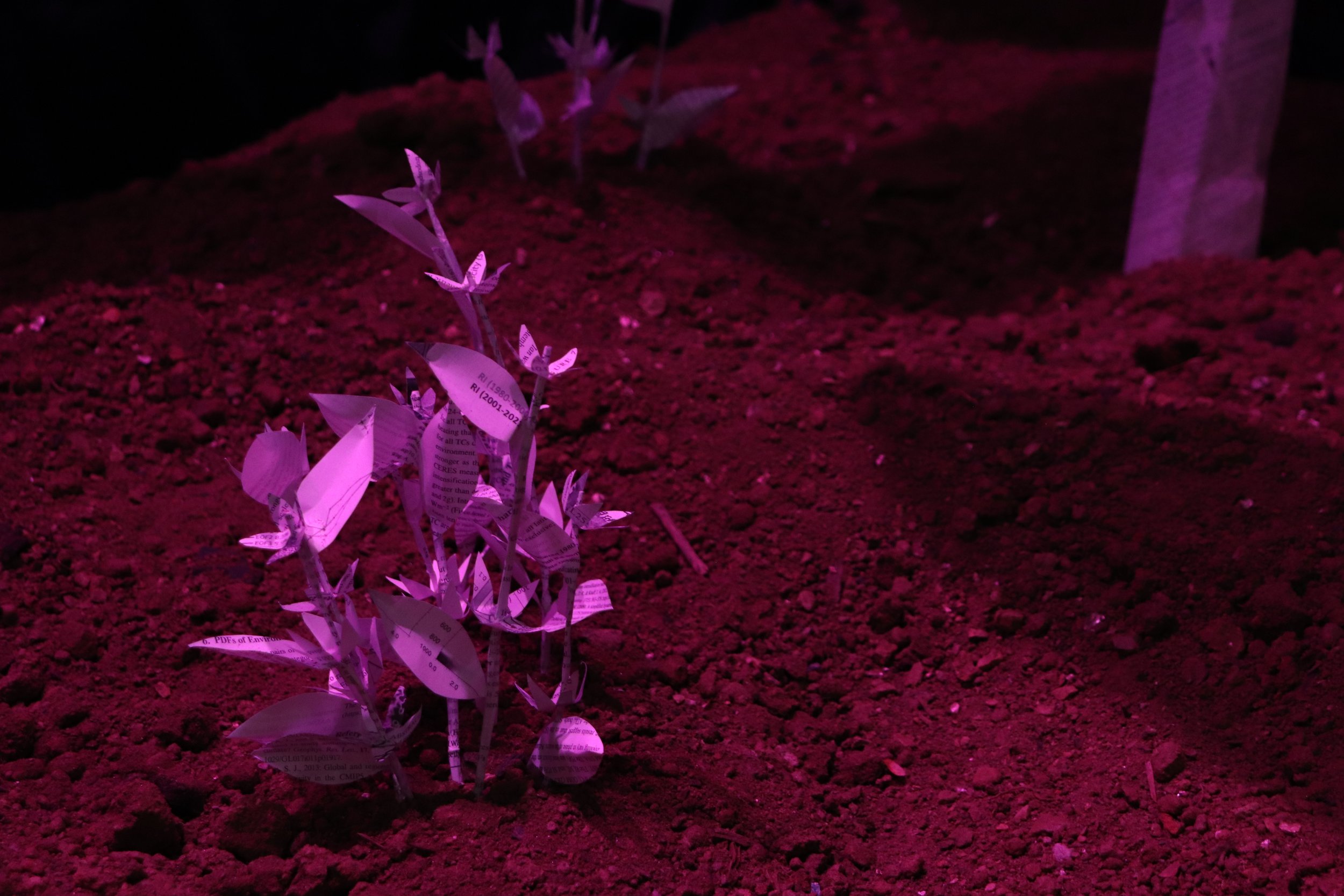
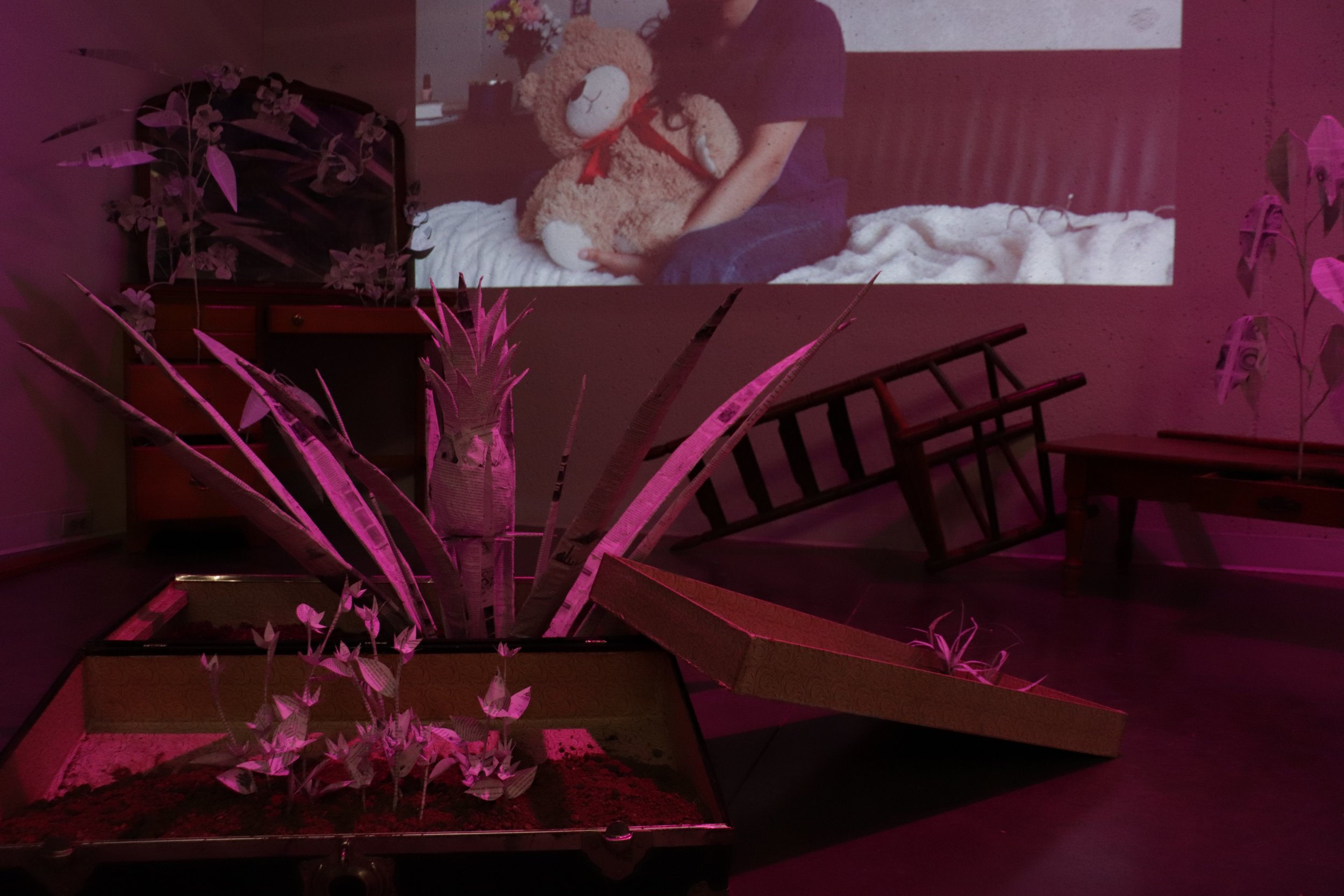
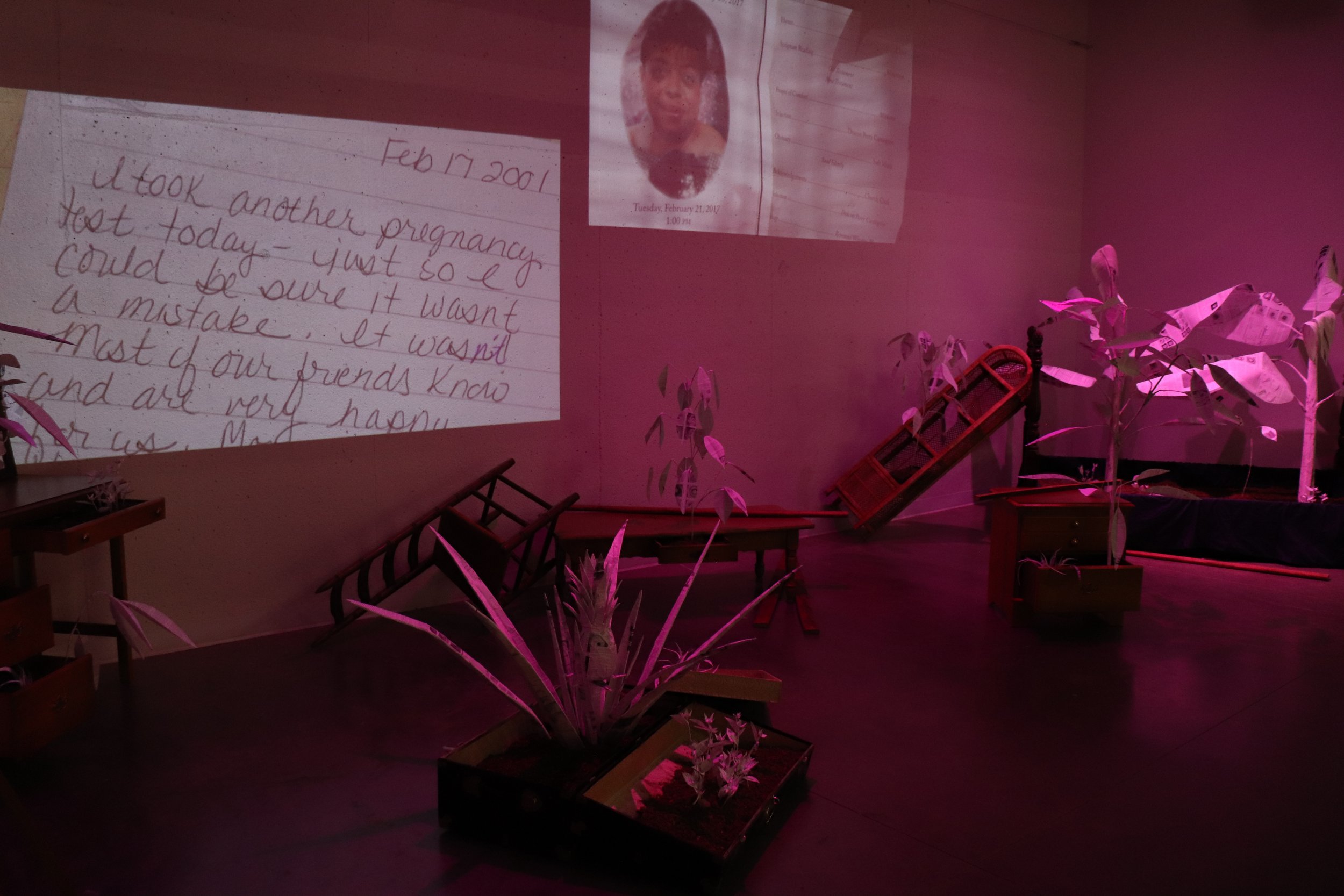
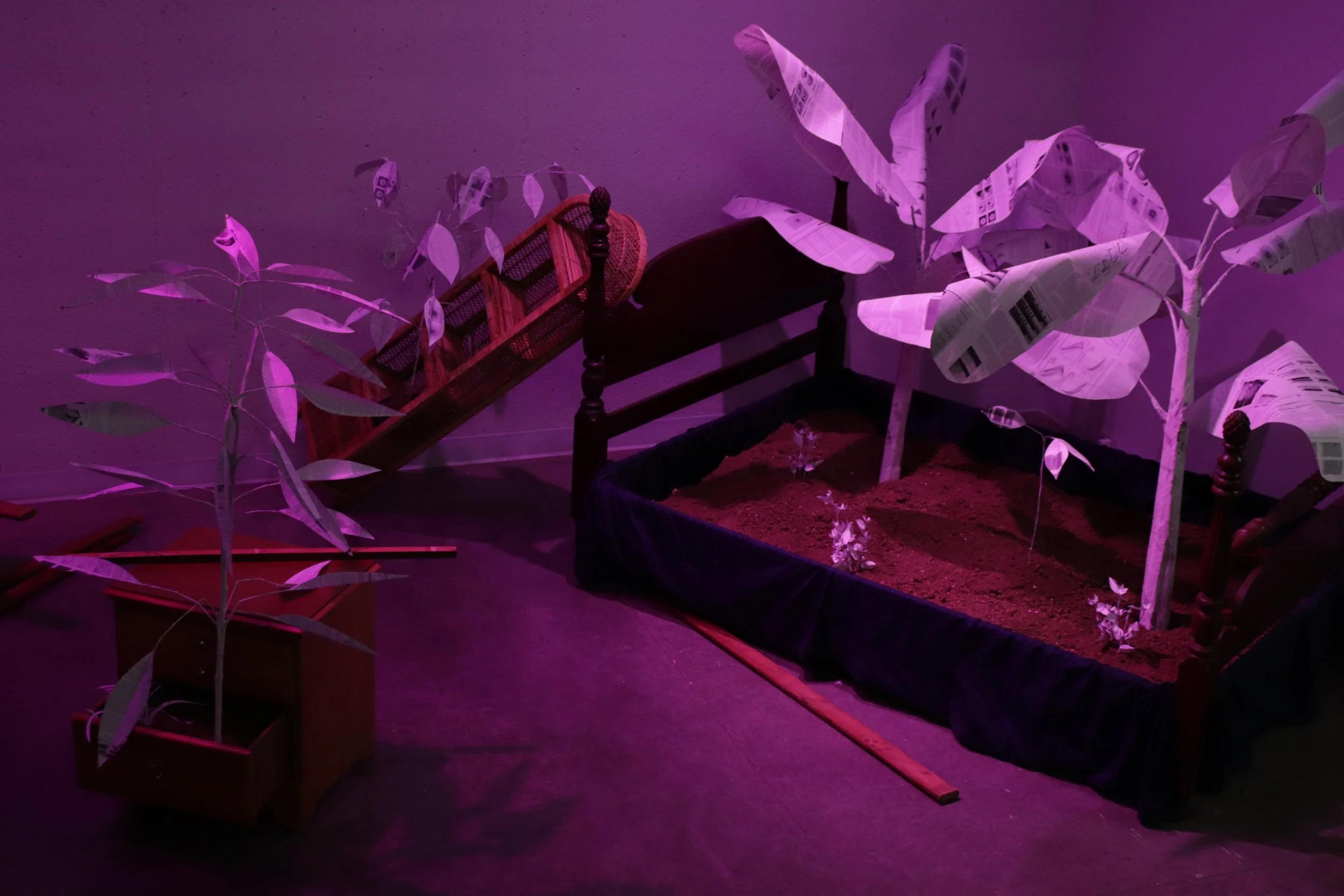
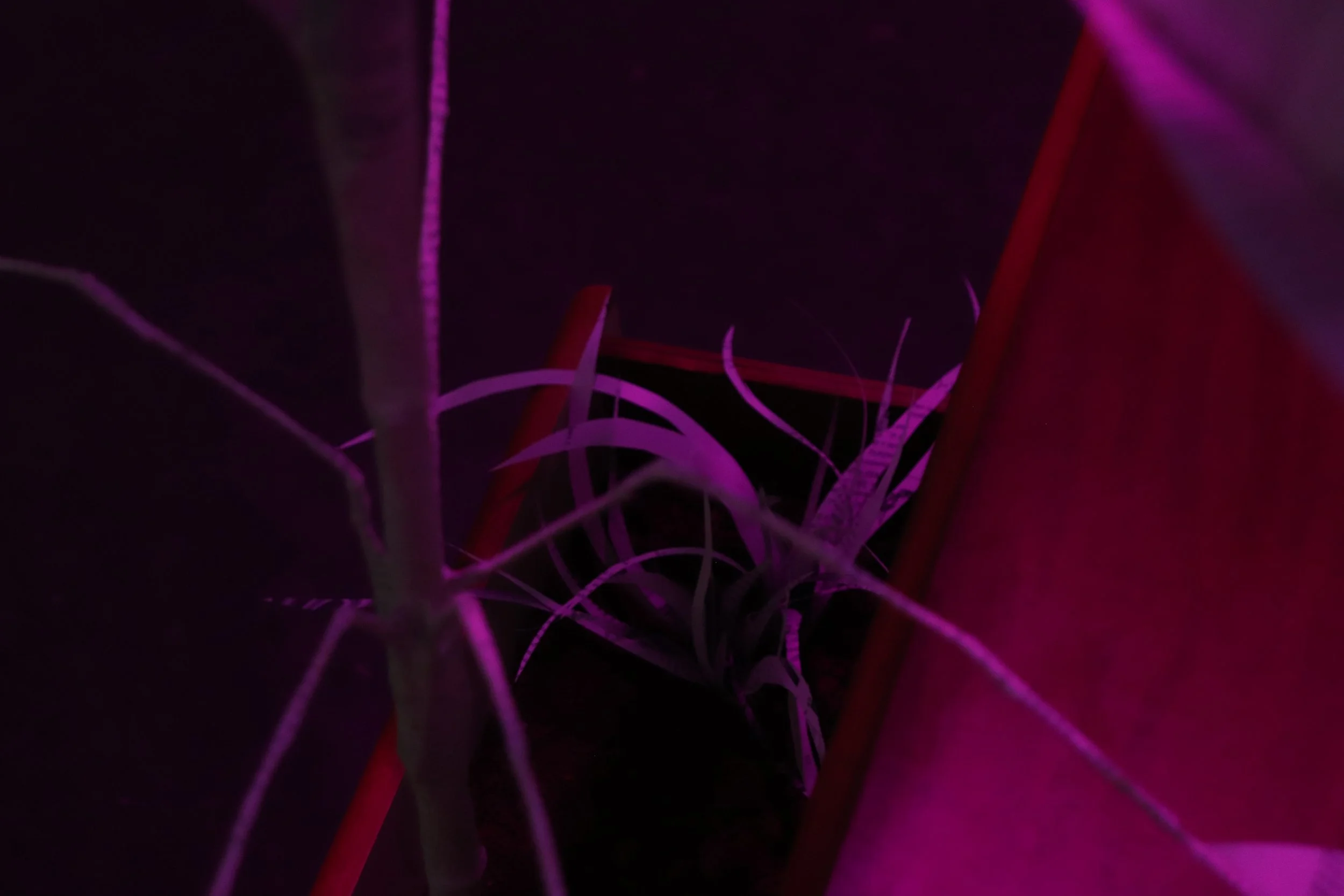
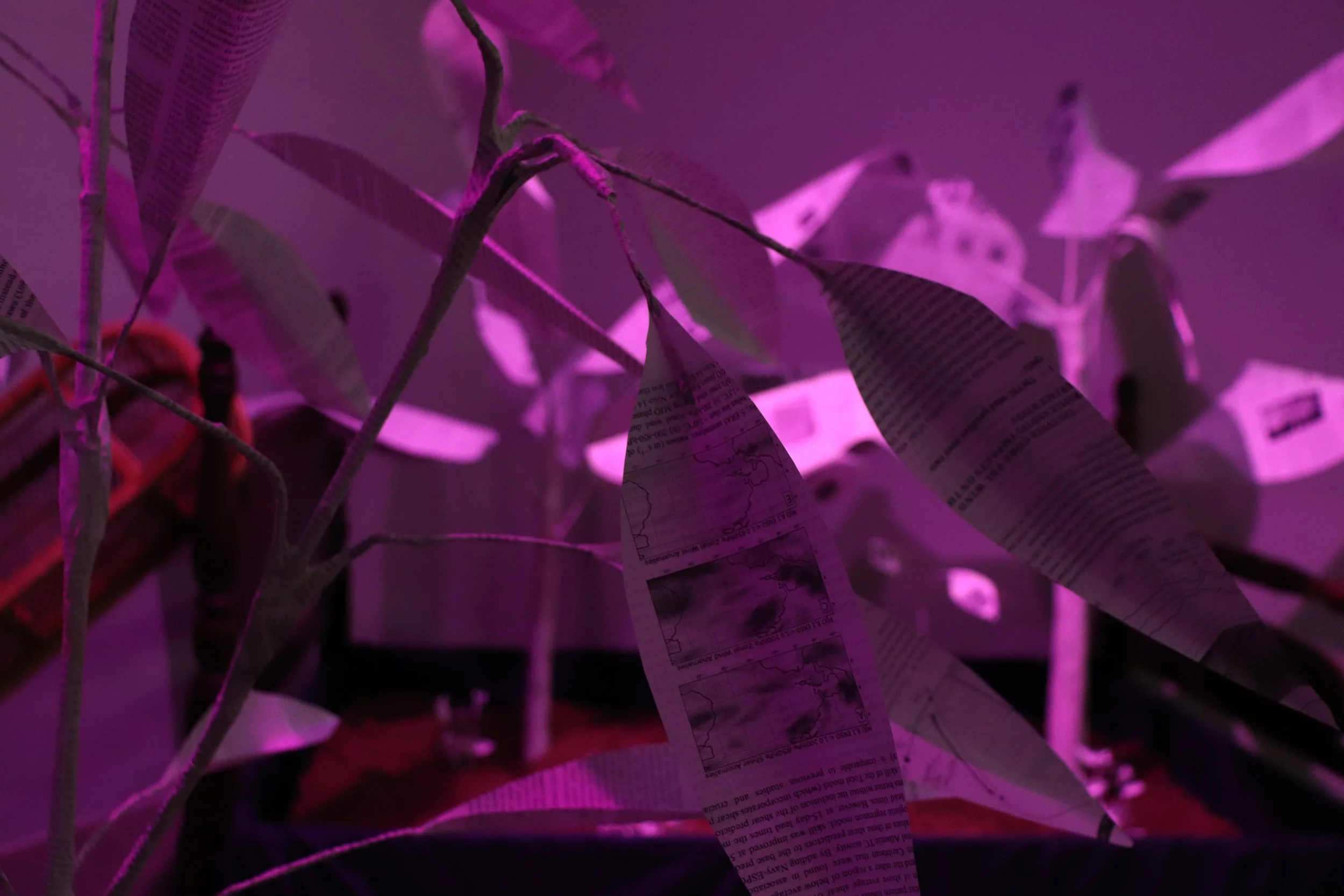
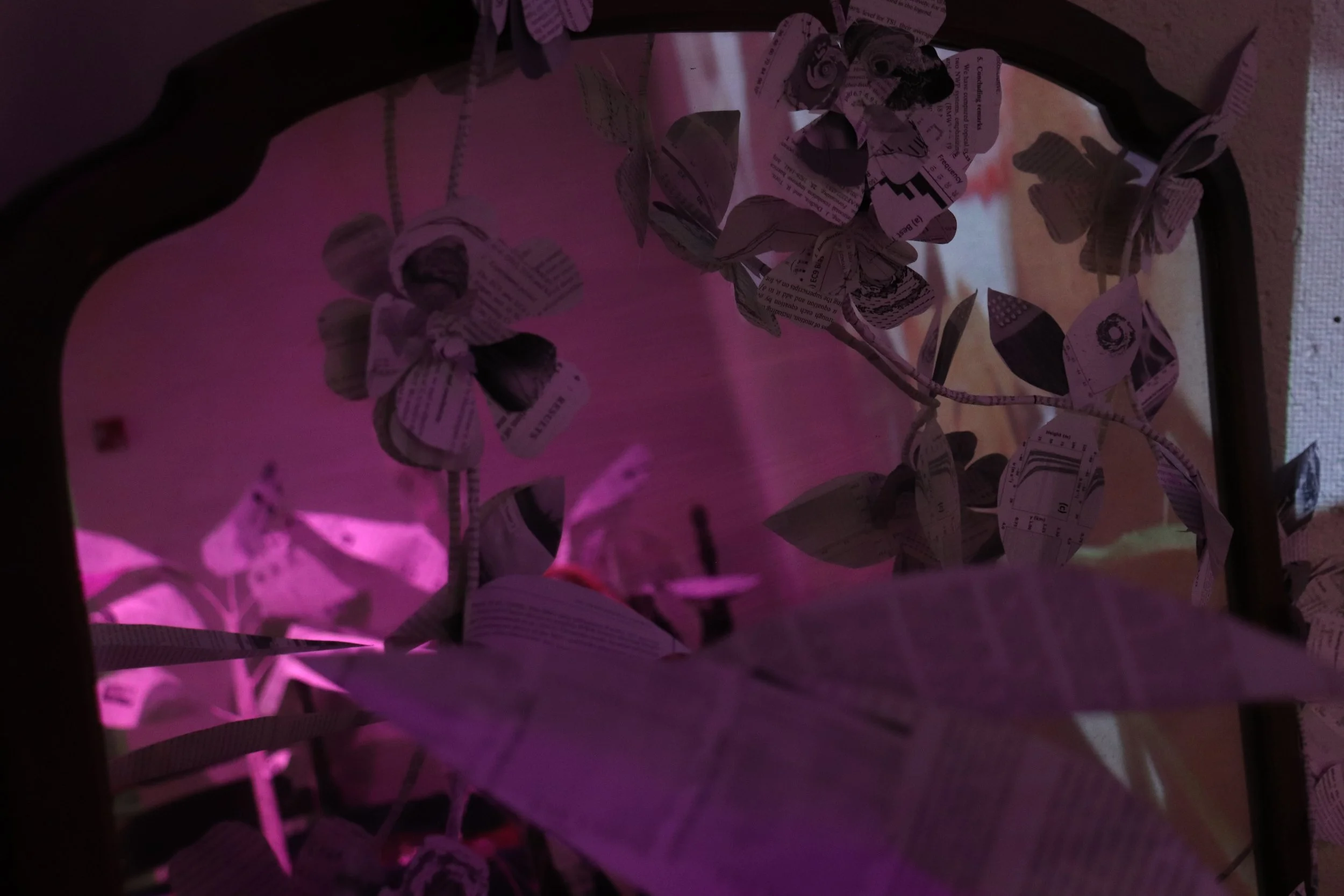
Banana, mango, avocado, vine, and flower plants overtake the toppled installation furniture as if time has passed, and the natural succession of growth after disaster has emerged once again. The plants are constructed using peer-reviewed hurricane research papers, published by University of Miami atmospheric scientists. It was important to me to feature climate science coming out of Florida, because it is one of the most restrictive states regarding environmental policy, education, and action; even the words “climate change” are banned from state law and school textbooks. To plant this research and these ideas in the dirt, to give them roots, is an act of nurturing climate science and ensuring its future, even through displacement. It is also a way to cope with loss by attempting an act of revival, finding growth within tragedy. The video and audio you hear come from interviewing local community members here in Charlottesville, prompting them with the question: What is the most irreplaceable object in your home?
The concepts of planting, gardening, and cultivating are deeply tied to our humanity and our stories of life, meaning, and morality. This thesis project recontextualizes science media as a living beings. Research papers are taken out of their typical, hidden environment and transform them into sculpture, a medium the general public knows how to engage with. In the installation, anyone can walk among climate research; they can gaze, inspect, hear, and see the papers come alive. Data becomes emotional and aesthetic information, restoring some of the subjectivity and creativity that objective, rigorous Science tries to strip away. Phrases and figures are at once legible and intact, while also being blended into a new aggregated medium and composing a new whole; one that creates an environment, an experience, and emotion. The sculptural interpretation complements and expands an academic interpretation of the same material to encourage new methods of analysis and empathy. This work carves out a space for the individual to feel like they are a part of environmental science conversations. I hope to push them to understand that the dots, lines, and charts are not just symbols or design, but that we–all of us–are the data points: our families, friends, followers, teachers, and neighbors. Environmental science is for and about the everyday person, telling the collective story of all entangled species and systems.