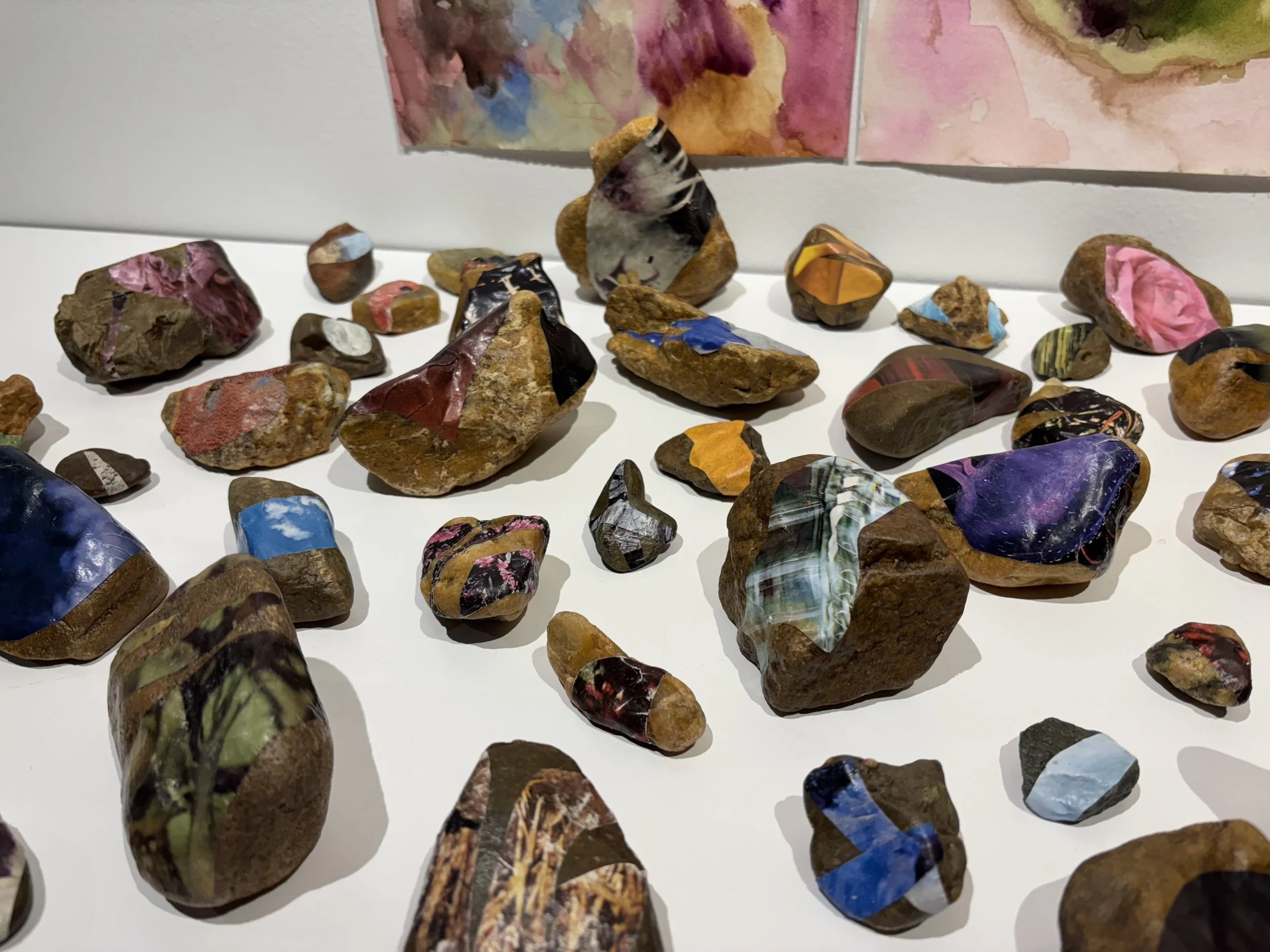
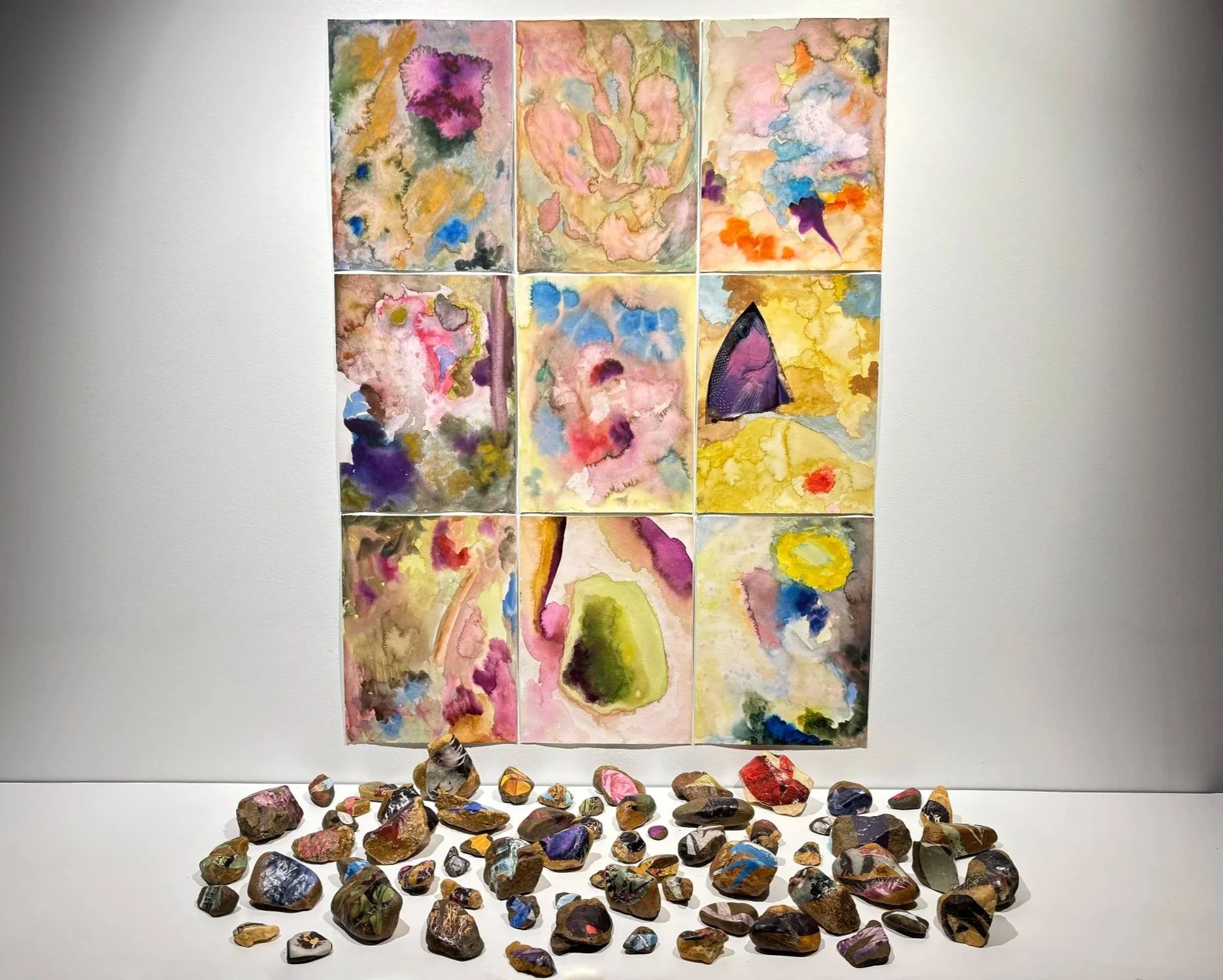
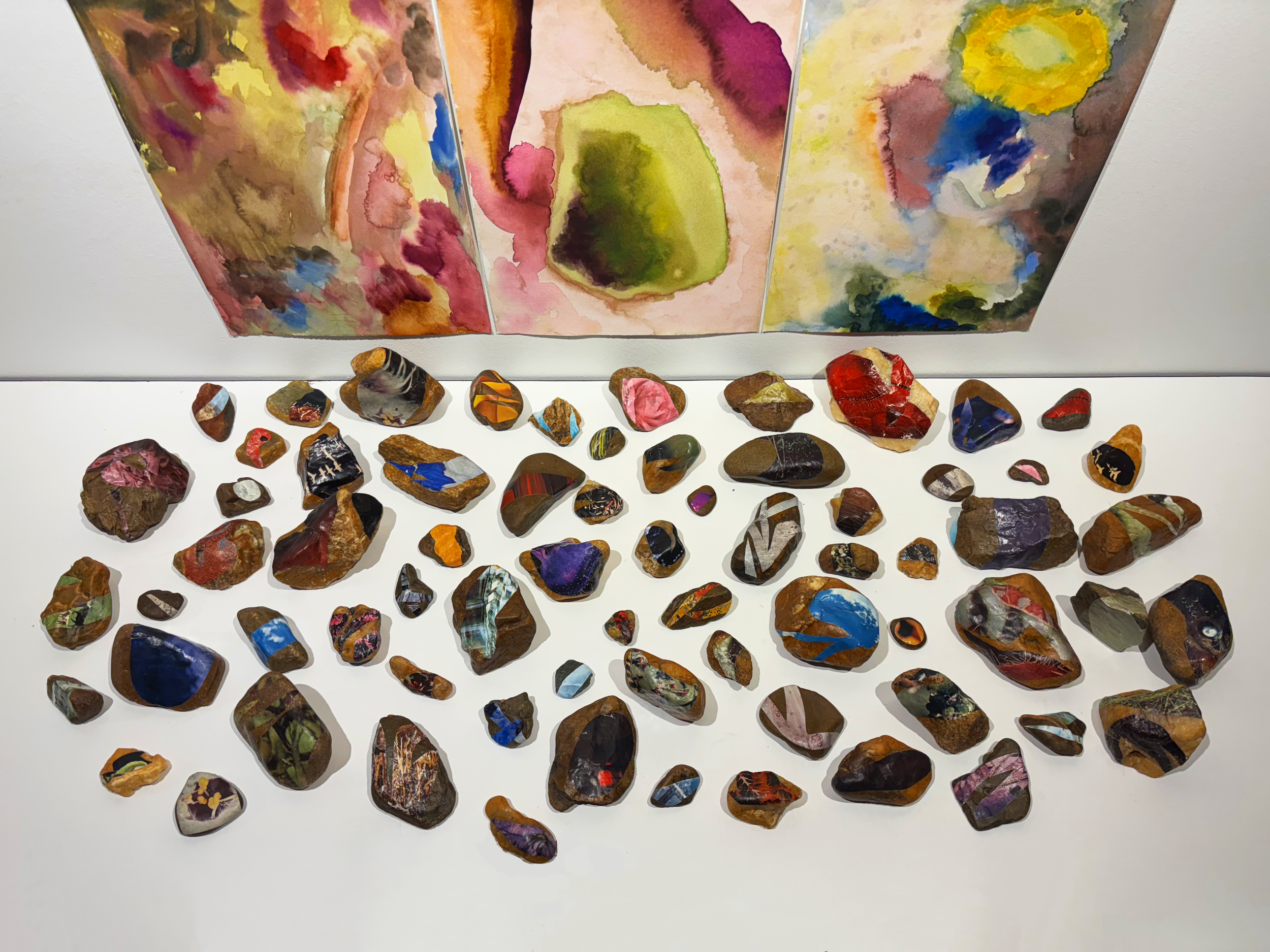
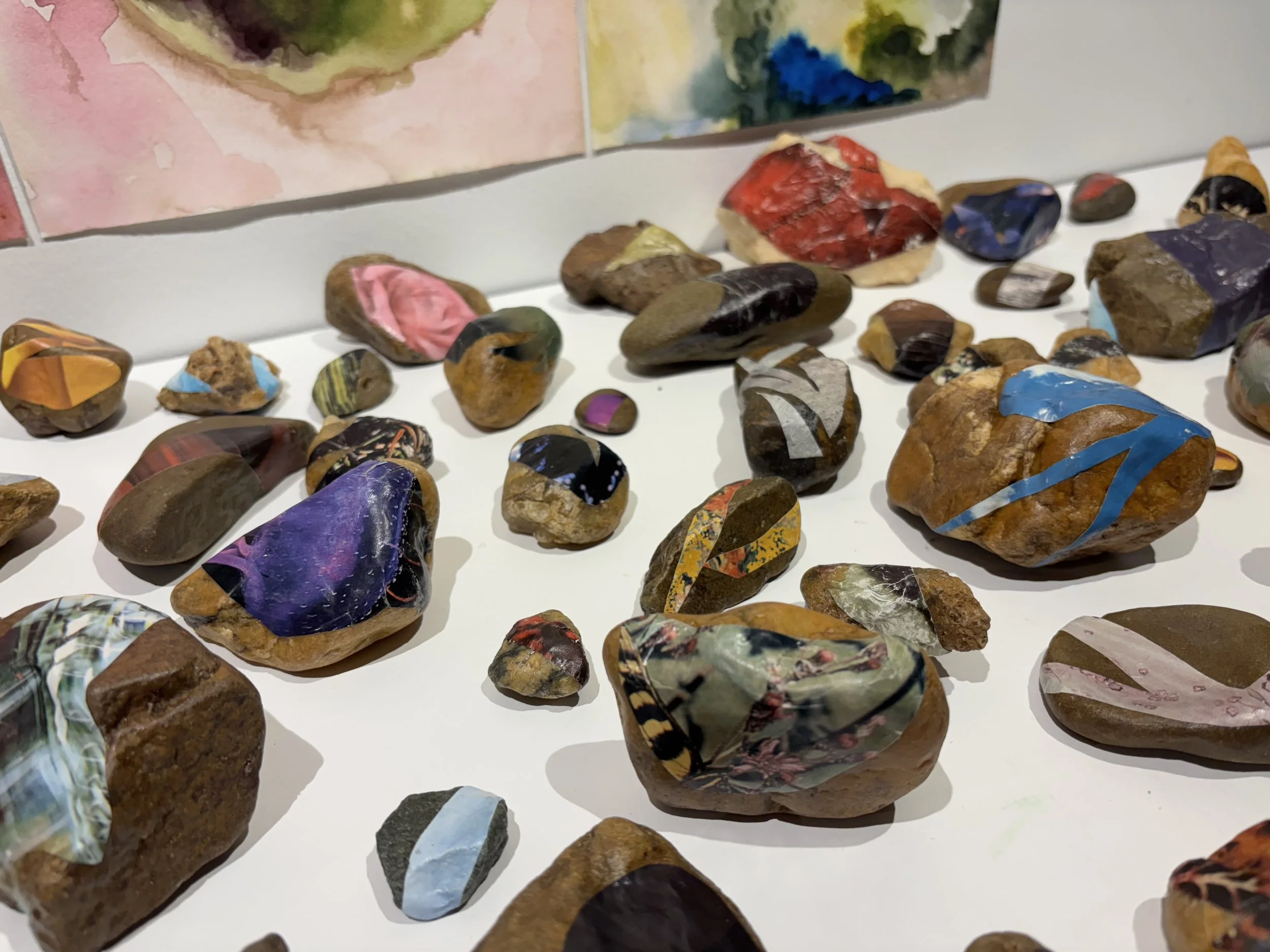
I’ve grown up alongside the Rivanna River in Charlottesville, Virginia. She raised me, taught me, kept me safe, and generously loved me. I care for the river. To me, the river is certainly not an it, but a who. Her personhood is a matter of the heart, not the law. This artwork is co-created with the Rivanna River and embodies our relationship; her contributions of rock and water go beyond pure physical material. An artistic setting brings attention to her masterful shapes, colors, and movements. She tells her stories herself; the patterns of flow and evaporation, the time it took to fracture or smooth a stone's surface, the geology and hydrology of a region filled with history and memory. The Rivanna River made this artwork as much as I. The touch of both human and water are present and dancing together.
Despite global research and attention to climate change and biodiversity loss, the general public remains unaware that freshwater systems and species are by far the most degraded and at risk of all the biosphere’s ecosystems. Birnie‑Gauvin et al., 2023, name this threat as perhaps the greatest conservation challenge facing humanity. The paper proposes reshaping our relationship with water as a fundamental need in the path to changing the way water is researched, used, and protected. Growing movements are led by indigenous groups around the globe that recognize the legal personhood of water bodies, granting them rights such as the right to flow freely, to exist without pollution, and the ability to defend violations with legal action. While we grant corporations identity and rights, most have no similar regard for the element that makes this planet a livable, wonderful home.
How might our freshwater systems heal and prosper if we listened to the perspectives of those who have maintained their relationships with the land? What if all people learned to see the water as an animate force, worthy of respect and consideration, instead of a lifeless material for careless use? Freshwater systems and species support us in a way that can only be called love, but the most human societies have failed to reciprocate. Our interconnection ensures that if the water is harmed, all species are harmed. But if the water thrives with us, all flourishing is mutual.
Suggested reading: Braiding Sweetgrass, Robin Wall Kimmerer